The trouble with a socket
For most amputees, a prosthetic leg attaches with a socket: a cup that fits over what remains of the limb. It works, but it is a lot to live with. Sockets pinch. They trap sweat. They rub skin into sores. The limb itself changes size, especially in the first year or so after amputation, so a socket that fit in the spring may not fit by fall. A leg that doesn't sit right is hard to control and easy to fall on.
Anchor it to the bone
Osseointegration skips the socket. A surgeon places a titanium implant inside the bone of the residual limb. Over about three months, living bone grows into the metal's porous surface until the two are locked together. That is what the word means: bone growing into a metal implant.
The idea isn't new. Dental implants and joint replacements have relied on it for decades, and surgeons in Sweden have used it for limbs since 1990.
A post through the skin
Here is the part that sounds like science fiction. A metal post connects to the implant and passes permanently through the skin. The prosthetic leg clicks onto that post and comes off again when you want it off. Some systems include a release that lets go in a hard fall, the way a ski binding does, so the force goes to the hardware and not the bone.
Feeling the ground again
Because the leg is fastened to the skeleton, vibrations from each step travel through the implant into the bone. Patients describe sensing the ground under a foot that isn't there. Doctors call it osseoperception. Along with it come better control of the leg and fewer of the skin problems a socket causes.
The hard problem
Skin is the body's wall against infection, and this device puts a permanent doorway in it. Infection, loosening and fracture are the known risks, and the opening has to be kept clean for life. Much of the research goes into that spot where metal meets skin.
What happened in Utah
At the University of Utah's Department of Orthopaedics, a team led by Kent Bachus spent years on engineering and animal studies of an implant that passes through the skin. That work led to an FDA feasibility study in ten veterans with above-the-knee amputations, which the university reports was completed successfully. A larger trial across several centers followed, along with a first study for people who have lost an arm above the elbow.
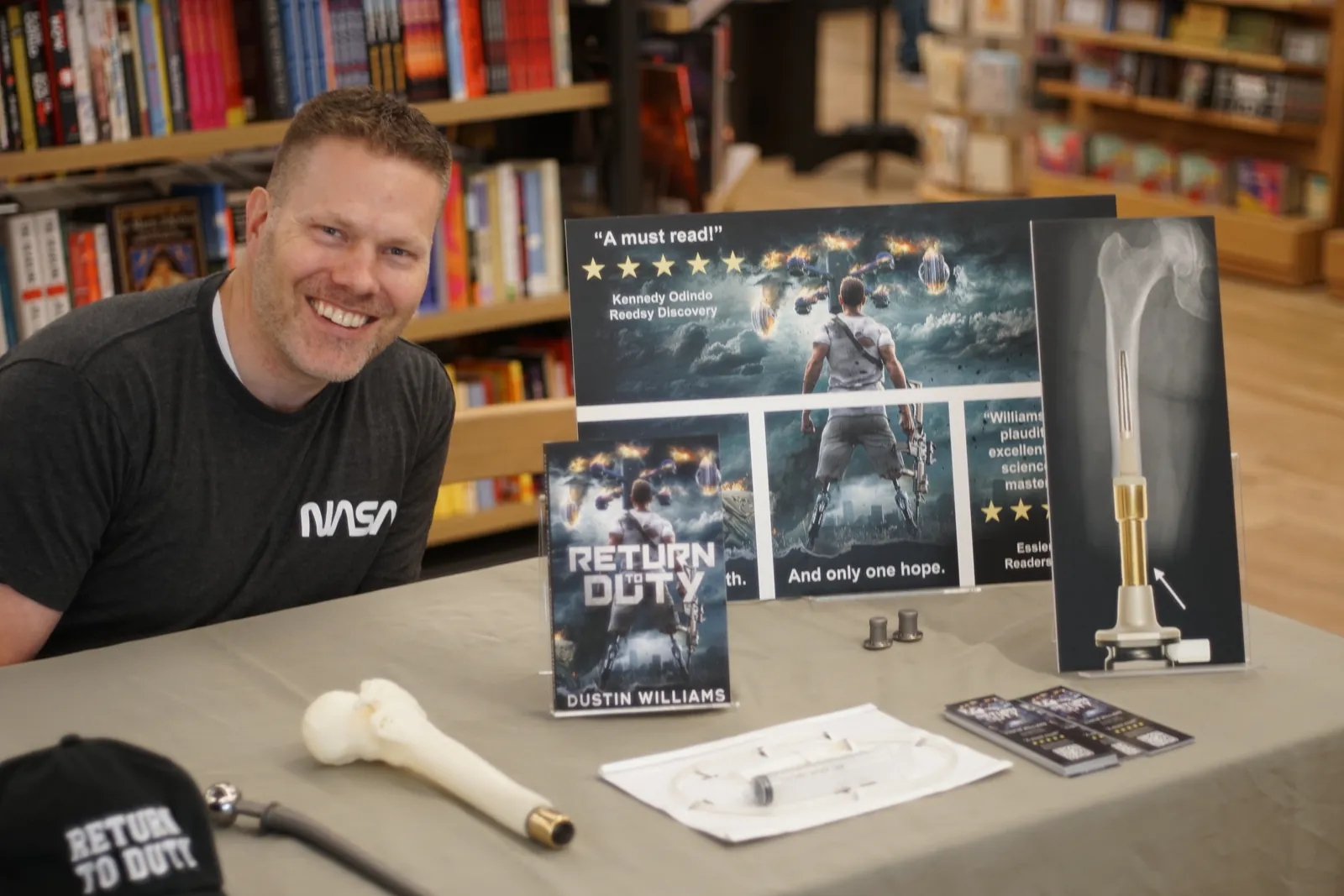
Dustin was on the team that developed that technology. The veterans he met along the way, and what they told him about life after battle, became Captain Ryker Vaughn.
So what did he make up?
The Ozzies in Return to Duty make Ryker stronger and faster than he was before. Real research teams are working toward true bionic legs, but that part is still fiction. So are the aliens. As far as anyone knows.
Sources: University of Utah School of Medicine · Hospital for Special Surgery